Rovika Insect Services logoRovika Insect Services
Fast, upfront pest control sevice in Indianapolis, IN, free quote in minutes

Pest Control Service Indianapolis

When seeking a pest control service in Indianapolis, property owners require rapid containment of biological vectors without entering mandatory subscription contracts. A qualified pest control service near me delivers precise inspection, non-disruptive chemical isolation, and mechanical perimeter sealing across Marion County properties.

Get your free pest control sevice quote, Indianapolis

We only use your ZIP to check availability, no spam.

Subterranean Termite RemediationTargeted Rodent Exclusion and ExtractionStinging Insect and Nest Removal
Pest Control Sevice in Indianapolis, IN
Pest Control Sevicein Indianapolis, IN

What is Pest Control Sevice in Indianapolis, IN?

Pest control service in Indianapolis is an environmental remediation and structural barrier system that identifies, isolates, and extracts biological infestations from residential and commercial structures across Marion County.

Why Indianapolis homeowners choose Rovika Insect Services

  • Baseline pest control service minimum on-site visits across Marion County start at $150 to $225, covering comprehensive multi-point diagnostic inspections, insect identification, and localized spot remediation.
  • Subterranean termite swarm activity across Indianapolis peaks between late March and mid-May, requiring immediate perimeter liquid trenching or subterranean hexalumuron monitoring stations to halt structural wood decay.
  • Perimeter treatments employ non-staining synthetic pyrethroids and targeted insect growth regulators that dry completely within 60 to 90 minutes, eliminating inhalation and contact hazards for infants and household pets.
  • Mechanical rodent exclusion physically seals sub-slab foundation penetrations, crawlspace vent frames, and roof fascia voids using 19-gauge 1/4-inch galvanized steel hardware cloth, copper wire mesh, and elastomeric sealants.
Subterranean Termite Remediation
Targeted Rodent Exclusion and Extraction
Stinging Insect and Nest Removal
Our Expertise

Pest Control Sevice services in Indianapolis

Every service reflects the same meticulous attention to detail, whether it's a single job or a larger pest control sevice project across Indianapolis.
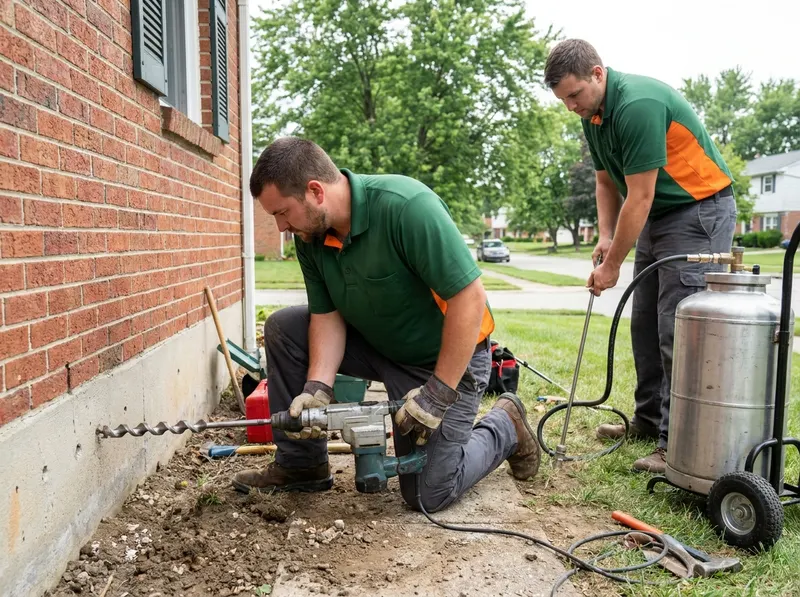
Subterranean Termite Remediation in Indianapolis, IN

Subterranean Termite Remediation

Subterranean termite defense utilizes professional non-repellent termiticides such as fipronil and imidacloprid applied via continuous trenching around the exterior perimeter foundation. Technicians dig 6-inch by 6-inch soil trenches directly along exterior brick veneer walls, concrete stem footings, and crawlspace piers, applying liquid solution at a regulated volume of 4 gallons per 10 linear feet per foot of depth. For concrete porches, attached patios, and garage aprons abutting living quarters, technicians sub-slab drill 1/2-inch holes spaced exactly 12 inches apart to inject termiticide into concealed gravel bases. Because non-repellent chemistry remains undetectable to worker termites, foragers transfer active ingredients throughout the subterranean colony through grooming and trophallaxis, achieving complete colony elimination within 60 to 90 days without driving insects deeper into framing lumber.

Get a quote →
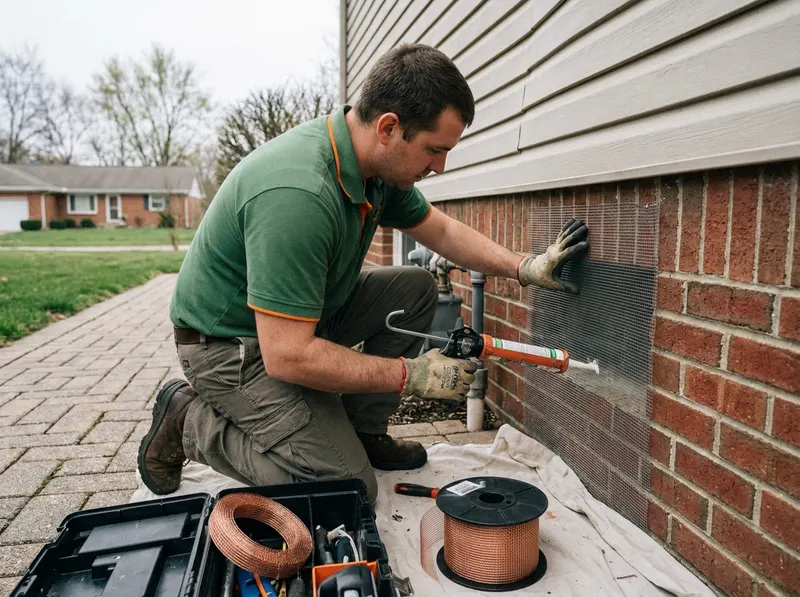
Targeted Rodent Exclusion and Extraction in Indianapolis, IN

Targeted Rodent Exclusion and Extraction

Rodent remediation combines mechanical trapping with permanent structural exclusion to eradicate Norway rats, roof rats, and house mice. Technicians inspect the building envelope from foundation sill plates to roof eaves, identifying all openings larger than 1/4 inch where biological pheromone grease marks indicate active transit. Technicians seal penetrations using rust-resistant 19-gauge galvanized hardware cloth, copper wire mesh packing, and UV-stabilized exterior polyurethane sealants around plumbing risers, HVAC conduit chases, crawlspace access hatches, and exterior corner boards. Interior trapping runs deploy mechanical snap traps loaded with professional non-food attractants along structural run paths in attics, basements, and drop ceilings. Following physical capture, technicians perform bio-enzyme decontamination, sanitizing droppings, neutralizing pheromone runways, and removing contaminated insulation.

Get a quote →
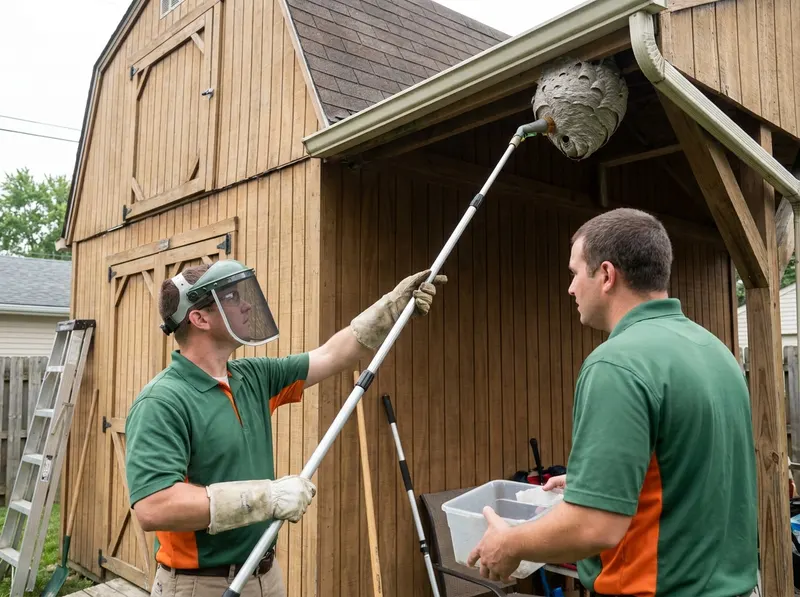
Stinging Insect and Nest Removal in Indianapolis, IN

Stinging Insect and Nest Removal

Targeted remediation for German yellowjackets, bald-faced hornets, paper wasps, and carpenter bees neutralizes immediate domestic health risks around roof overhangs, window frames, and subterranean ground cavities. Technicians wear specialized containment suits and utilize pressurized micro-emulsion sprays and micro-fine pyrethroid dust applications injected directly into nest entry portals. For yellowjackets nesting within exterior wall voids, specialized aerosol injection probes freeze and knock down active workers without allowing stinging insects to escape into interior living rooms or bedrooms. Once flying adult populations are suppressed, technicians physically detach external paper combs and subterranean nests, scraping the attachment surfaces clean and treating the backing material with micro-encapsulated repellents to prevent secondary queens from rebuilding.

Get a quote →
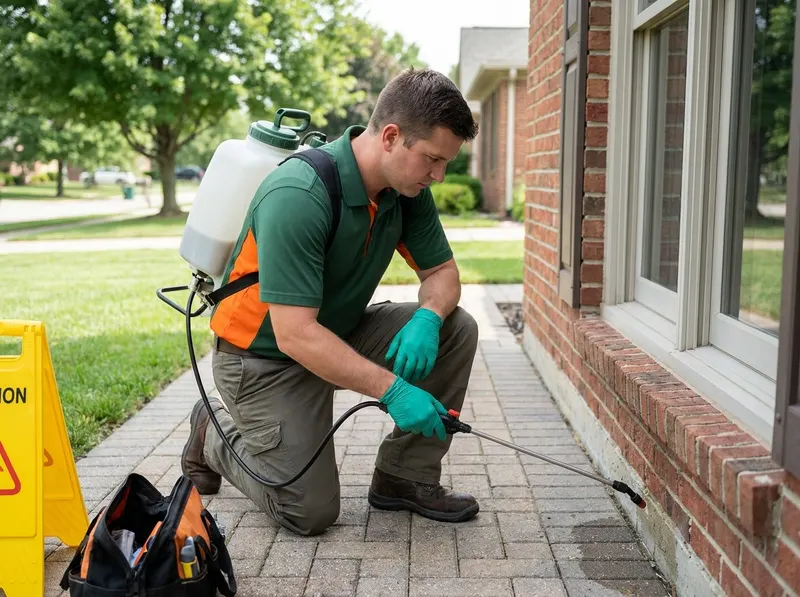
Crawling Insect and Micro-Perimeter Barriers in Indianapolis, IN

Crawling Insect and Micro-Perimeter Barriers

Targeted micro-perimeter defense eradicates recurring domestic infestations of German cockroaches, brown-banded cockroaches, odorous house ants, pavement ants, and boxelder bugs. Exterior treatments apply micro-encapsulated synthetic pyrethroid suspensions along foundation walls, extending 3 feet upward from soil and 2 feet outward across mulch beds and splash blocks, creating an invisible terminal contact barrier. Interior remediation isolates sensitive utility zones through precision bait placements using indoxacarb, hydramethylnon, or abamectin gels in wall voids, beneath refrigeration units, and behind plumbing escutcheons. The formulation incorporates synthetic insect growth regulators such as pyriproxyfen, which halt chitin synthesis and prevent juvenile instars from developing into fertile reproductive adults.

Get a quote →
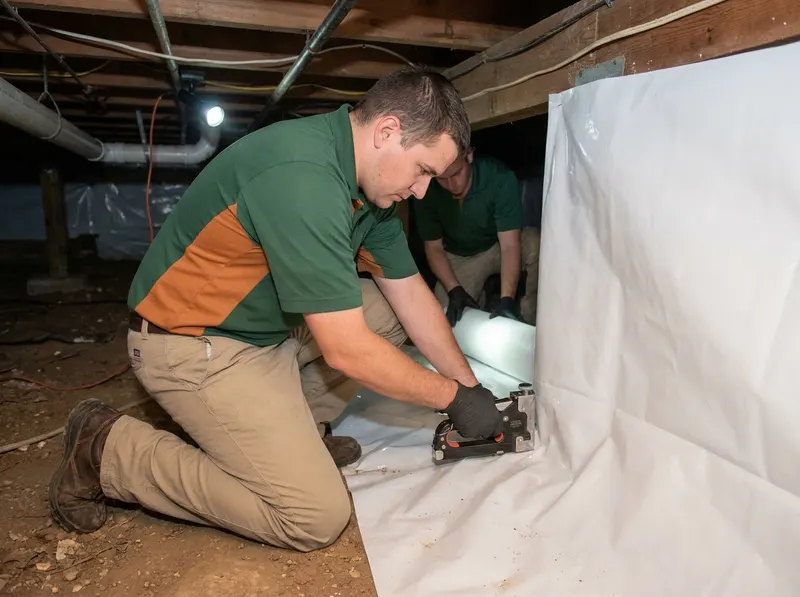
Crawlspace and Basement Moisture Barrier Treatment in Indianapolis, IN

Crawlspace and Basement Moisture Barrier Treatment

High relative humidity within dirt-floor basements and unsealed crawlspaces creates an ideal habitat for camel crickets, silverfish, sowbugs, and wood-destroying fungi. Technicians regrade soil depressions, remove organic construction debris, and install heavy-duty 10-mil to 12-mil cross-laminated polyethylene vapor retarders across 100 percent of exposed dirt floors. Polyethylene seams are overlapped a minimum of 12 inches and mechanically bonded with specialized vapor tape, while edges are anchored 6 inches up masonry foundation walls using acoustic sealants and masonry pins. Structural joists, rim boards, and sill plates are simultaneously sprayed with disodium octaborate tetrahydrate, creating an enduring mineral barrier that halts wood decay fungi, dampwood termites, and powderpost beetle larvae.

Get a quote →
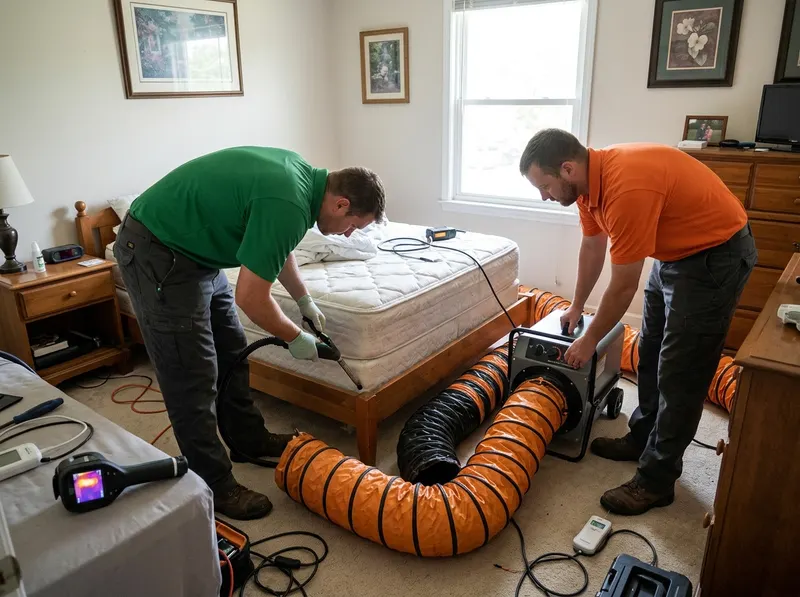
Thermal and Targeted Bed Bug Remediation in Indianapolis, IN

Thermal and Targeted Bed Bug Remediation

Thermal and targeted bed bug remediation provides whole-room or whole-structure eradication of Cimex lectularius without requiring families to discard furniture. Industrial-grade electric or indirect fired heaters circulate high-volume heated air through ducted blower systems, steadily raising interior room temperatures to lethal zones between 122°F and 135°F. Technicians employ thermal imaging sensors and remote thermocouple monitoring probes inside mattress seams, wall voids, and deep baseboard cavities to confirm lethal temperatures are sustained for 4 to 6 continuous hours, killing heat-sensitive adult insects and desiccation-resistant eggs. Following thermal treatment, technicians dust structural baseboard hollows and electrical outlet boxes with amorphous silica gel desiccant to provide ongoing physical insect barrier protection.

Get a quote →
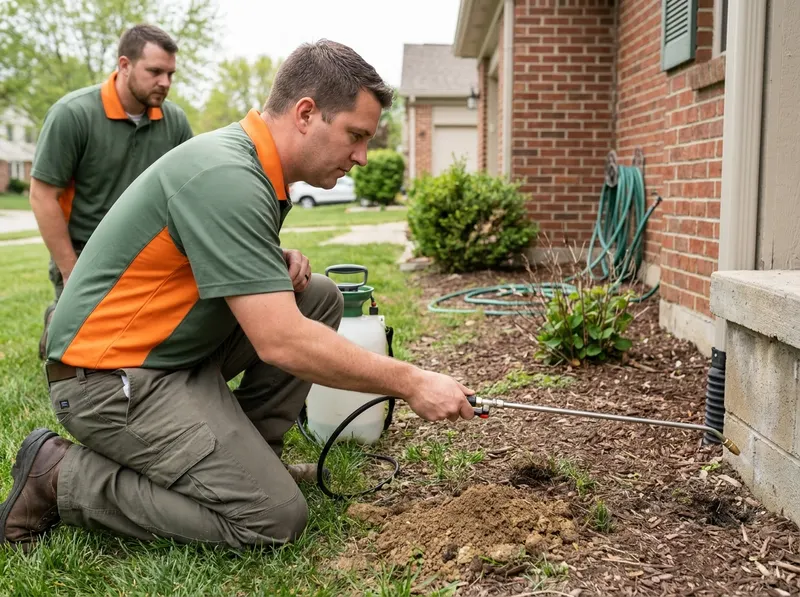
Ant Colony Elimination and Injection in Indianapolis, IN

Ant Colony Elimination and Injection

Specialized ant remediation addresses persistent colonies of carpenter ants, odorous house ants, and pharaoh ants nesting inside structural framing, window headers, and insulation voids. Rather than spraying repellent chemicals that trigger colony budding and disperse satellite nests throughout living spaces, technicians map out structural moisture leaks and track active foraging lines. Technicians use precision micro-injection equipment to deliver slow-acting non-repellent liquid transfers and high-protein or carbohydrate bait matrixes directly into active wall cavities. For wood-damaging black carpenter ants, technicians drill 1/8-inch access ports directly into hollow interior doors, framing studs, or porch columns to inject pressurized insecticidal foam, destroying parent colonies and safeguarding structural wooden timbers.

Get a quote →
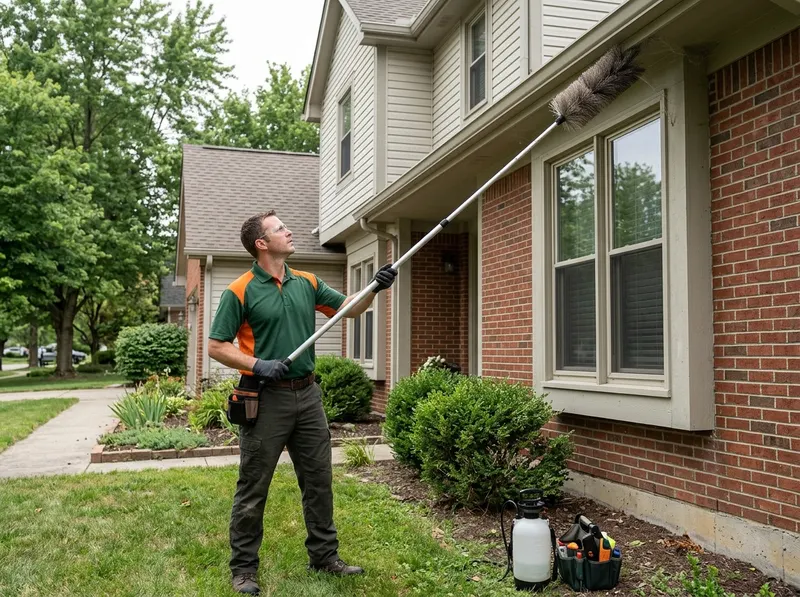
Spider Suppression and Web Abatement in Indianapolis, IN

Spider Suppression and Web Abatement

Spider management programs target predatory arachnids including brown recluse, black widow, wolf spiders, and common house spiders sheltering in basements, crawlspaces, attics, and outdoor architectural eaves. Technicians physically clear webbing, egg sacs, and insect prey debris from window recesses, soffits, gutters, and basement ceiling joists using telescoping electrostatic dusters treated with micro-fine pyrethroid dusts. Exterior perimeter foundations, window perimeters, and door thresholds receive a water-resistant micro-encapsulated barrier spray that repels crawling arachnids and reduces insect prey populations. Interior closets, crawlspace edges, and storage rooms are treated with physical glue monitoring traps placed flush against baseboards to intercept wandering hunting spiders and provide continuous diagnostic tracking.

Get a quote →
The essentials

What Indianapolis customers should know

  • Baseline pest control service minimum on-site visits across Marion County start at $150 to $225, covering comprehensive multi-point diagnostic inspections, insect identification, and localized spot remediation.
  • Subterranean termite swarm activity across Indianapolis peaks between late March and mid-May, requiring immediate perimeter liquid trenching or subterranean hexalumuron monitoring stations to halt structural wood decay.
  • Perimeter treatments employ non-staining synthetic pyrethroids and targeted insect growth regulators that dry completely within 60 to 90 minutes, eliminating inhalation and contact hazards for infants and household pets.
  • Mechanical rodent exclusion physically seals sub-slab foundation penetrations, crawlspace vent frames, and roof fascia voids using 19-gauge 1/4-inch galvanized steel hardware cloth, copper wire mesh, and elastomeric sealants.
  • Targeted emergency response protocols dispatch trained technicians within 2 to 4 hours across Indianapolis for high-hazard stinging insect colonies, sudden indoor rodent intrusions, and severe pantry contaminations.
The Rovika Insect Services standard

Why Indianapolis keeps calling us back

01

A clear, written price

You get a firm, itemized quote for your pest control sevice before any work begins, no surprises, no pressure.

02

Your property, protected

Careful prep, tidy work, and a full cleanup when we are done. We treat your home and belongings like our own.

03

One crew, start to finish

The same trusted, background-checked team from the first call to the final check.

Buyer's guide

Choosing the right pest control sevice pro in Indianapolis

Selecting the correct intervention depends on the target vector, structural building envelope materials, and tolerance for chemical exposure versus mechanical isolation. If dealing with localized seasonal foraging insects such as odorous house ants, pavement ants, or American cockroaches in utility rooms, choose targeted micro-barrier spot applications combined with borate-based gel formulations; if addressing structural integrity threats from Eastern subterranean termites or powderpost beetles within structural timbers, choose non-repellent liquid soil barriers combined with hexalumuron subterranean bait arrays. The trade-off centers directly on upfront chemical investment versus physical containment duration: spot barrier sprays resolve active room-level vectors immediately for $150 to $325, whereas continuous subterranean barrier trenching costs $950 to $2,450 but establishes an uninterrupted five-to-ten-year liquid residual defense zone around poured concrete, slab-on-grade, or limestone rubble foundations.

If experiencing nocturnal attic scurrying, scratching inside wall cavities, or chewed wiring, homeowners face the choice between continuous exterior rodenticide baiting programs versus one-way door mechanical exclusions paired with structural void sealing. Repetitive bait boxes reduce exterior rodent pressure for $65 to $110 per monthly or bimonthly cycle, but toxicant boxes leave dead rodents susceptible to decaying inside concealed wall cavities, generating noxious biological odors and secondary carpet beetle outbreaks. Conversely, mechanical one-way door exclusion combined with 1/4-inch galvanized hardware cloth sealing costs $275 to $650 as an initial investment, permanently halting ingress at foundation sill plates, air-conditioning chase pipes, and roof soffit returns without deploying interior poisons.

For severe bed bug infestations inside finished living spaces, chemical spray protocols cost $300 to $600 per room but demand 2 to 3 repeated visits spread over 30 days to target newly hatched instars; thermal heat remediation requires an initial outlay of $800 to $2,500 for whole-structure or multi-room heating, but eradicates all life stages, including desiccation-resistant eggs, in a single 6-to-8-hour window at 122°F to 135°F. For crawlspace pest problems, basic surface fogging costs $150 to $250 but leaves damp floor framing vulnerable to continuous re-infestation; complete encapsulation paired with a 10-mil to 12-mil polyethylene vapor barrier and borate timber coating ranges from $1,200 to $3,800, permanently starving wood-boring insects, camel crickets, and fungal microbes of essential environmental moisture.

Investment

Pest Control Sevice cost in Indianapolis

Every project gets a firm, written price after a free on-site visit. Ranges below for orientation.

Targeted Diagnostic Inspection & On-Site Minimum$150, $225
Single-Visit Crawling Insect Barrier Application$175, $325
Exterior Rodent Exclusion Sealing & Trapping Setup$275, $650
Emergency Stinging Insect Nest Neutralization$185, $375
Subterranean Termite Trenching & Chemical Defense$950, $2,450
Thermal Bed Bug Remediation (Per Room)$450, $950
Full Attic or Crawlspace Biological Decontamination$600, $1,800
Carpenter Ant Wall Cavity Foam Injection$250, $550
Crawlspace Polyethylene Vapor Barrier Installation$1,200, $3,400
Whole-Yard Flea & Tick Micro-Encapsulated Spray$225, $475
Interior Pantry Pest Extraction & Pheromone Setup$175, $350
Free, no-pressure estimate

Get it done right

Tell us about your pest control sevice job and we'll send a clear, written quote, usually the same day. Or just call and talk to a real Indianapolis pro.

(463) 304-9016
Get your free pest control sevice quote, Indianapolis

We only use your ZIP to check availability, no spam.

Where we work

Areas we serve near Indianapolis

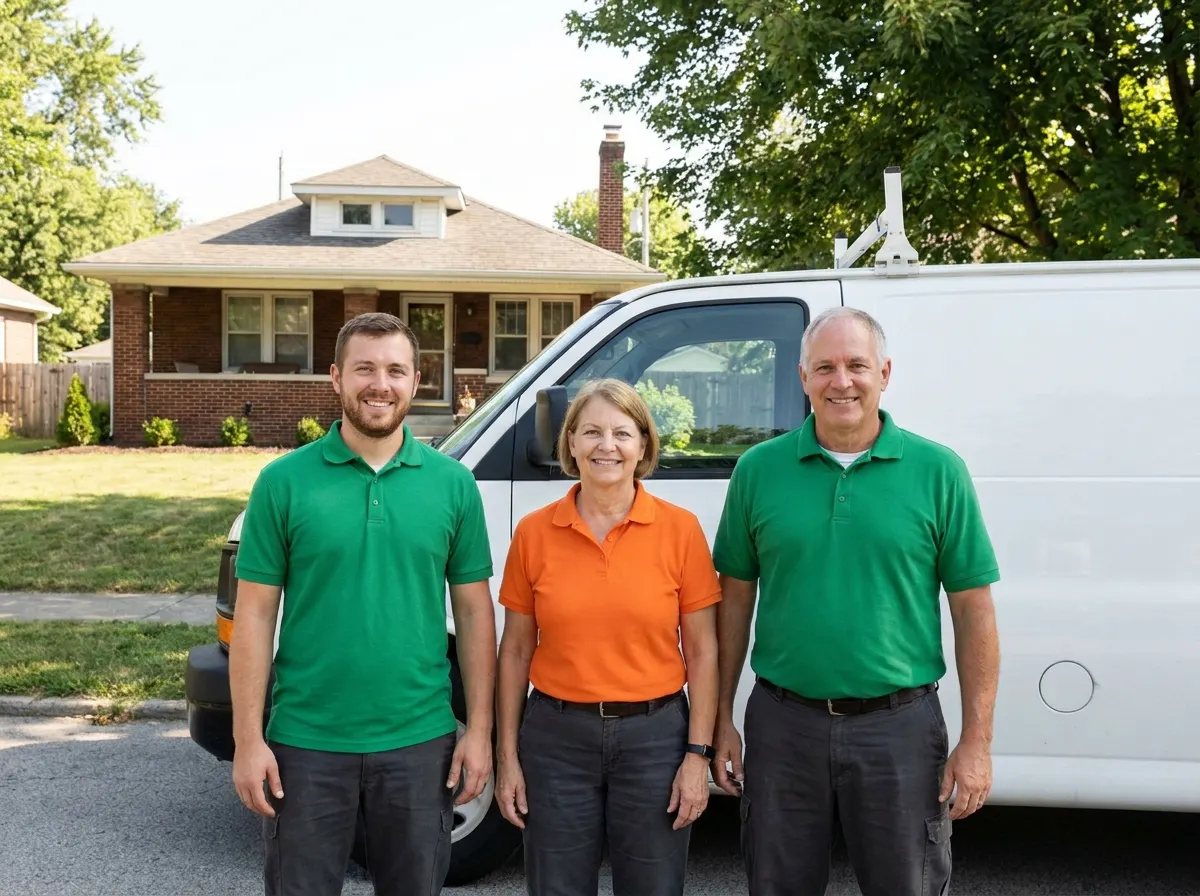
Rovika Insect Services pest control sevice team in Indianapolis, IN

Properties near Eagle Creek Park and White River State Park encounter severe seasonal water-table fluctuations, forcing Norway rats and field mice through limestone foundation cracks into crawlspaces each autumn. Historic homes throughout Meridian-Kessler, Woodruff Place, and Lockerbie Square frequently feature century-old soft-brick masonry, fieldstone basements, and untreated structural sill plates susceptible to subterranean termite migration from damp river-bottom soils. Urban residential pockets along the Monon Trail corridor, Broad Ripple, and Fletcher Place face intensive localized yellowjacket populations nesting in porch overhangs, wood fascia, and aged limestone retaining walls between July and September. Further west near the Indianapolis Motor Speedway and north in Castleton, suburban slab-on-grade developments experience heavy spring invasions of odorous house ants foraging through foundation weep holes and garage joints during April rainy spells. Autumn temperature drops in late September trigger mass migrations of brown marmorated stink bugs and boxelder bugs on sun-facing vinyl siding across Marion County, requiring proactive barrier applications along eaves, window casings, and attic ridge vents before pests penetrate structural wall voids.

Broad RippleFountain SquareIrvingtonFletcher PlaceMeridian-KesslerWoodruff PlaceLockerbie SquareButler-TarkingtonCastletonSpeedway
Questions

Common questions

What is the standard response time for emergency pest control service in Indianapolis?
Emergency dispatches for aggressive stinging insects, severe indoor rodent intrusions, or structural biological hazards across Indianapolis arrive on-site within 2 to 4 hours of your initial call. Standard barrier applications, termite inspections, and general crawling insect visits are scheduled within 24 to 48 hours, Monday through Saturday. Service routes operate continuously across Marion County, prioritizing immediate domestic stabilization for families experiencing nighttime biological pest discoveries.
Are the chemical barrier treatments used in Indianapolis safe for children and pets?
Perimeter and interior barrier treatments utilize EPA-registered formulations, synthetic pyrethroids, and micro-encapsulated suspensions engineered for low mammalian toxicity. Homeowners, children, and pets must vacate wet indoor surfaces for 60 to 90 minutes following application until liquid barriers dry completely. Once dry, chemical residues bond tightly to structural substrates without producing airborne off-gassing, volatile compounds, or secondary contact transfer hazards for crawling infants or household animals.
How does weather in Indianapolis affect the longevity of exterior perimeter pest barriers?
Central Indiana weather, characterized by heavy spring rainstorms, high summer humidity, and freezing winter temperatures, gradually breaks down exterior chemical barriers over a 60-to-90-day window. Micro-encapsulated formulations are engineered to bind directly to brick, stone, and compacted soil particles, resisting wash-off from standard rain events. However, unencapsulated base sprays degrade within 30 days under prolonged UV exposure and saturated soil conditions near roof drip lines.
Do I have to sign an ongoing monthly or quarterly contract for pest control service in Indianapolis?
Ongoing service contracts are not required. Property owners across Marion County can choose standalone, single-visit remediation protocols for active bed bug infestations, localized wasp nests, flea treatments, or mechanical rodent exclusion. Exact costs are confirmed during an on-site structural evaluation, giving property owners total control over whether to schedule follow-up preventative treatments or resolve active infestations as a single discrete service.
What structural entry points are most common for pests in older Indianapolis homes?
Older residences in historic Indianapolis neighborhoods like Irvington, Butler-Tarkington, and Woodruff Place commonly admit pests through gaps where floor sill plates meet fieldstone or brick foundations. Openings around exterior plumbing bibs, natural gas supply pipes, unmeshed crawlspace vents, deteriorated cast-iron drain lines, and decayed wood fascia boards allow mice and insects direct entry. Sealing these voids with 19-gauge galvanized hardware cloth, elastomeric caulk, and copper mesh halts primary pest migration.
What are the earliest structural warning signs of subterranean termites in Marion County?
Early indicators of subterranean termite infestations in Marion County include earthen mud shelter tubes running vertically along masonry basement walls, crawlspace piers, or concrete foundation footings. Homeowners also discover discarded translucent insect wings on interior window sills following warm spring rains from late March through May. Spongy floor joists, hollow-sounding baseboard trims, and faint blistering paint across structural sheetrock indicate active interior cellulose feeding requiring immediate non-repellent soil trenching.
How do technicians in Indianapolis differentiate between carpenter ants and subterranean termites?
Technicians differentiate carpenter ants from subterranean termites by examining physical anatomy, wood damage patterns, and biological debris. Carpenter ants possess pinched waists, elbowed antennae, and wings of unequal length, excavating clean, smooth-walled galleries within wood framing while discarding sawdust-like frass containing insect parts. Subterranean termites have thick, straight waists, straight bead-like antennae, and equal-length wings, consuming wood cellulose completely and leaving galleries packed with moist soil and fecal mud.
Can mechanical rodent exclusion in Indianapolis completely resolve mouse infestations without interior poison baits?
Mechanical rodent exclusion combined with strategic interior snap trapping eliminates interior mouse populations entirely without relying on toxic bait blocks. Sealing all exterior gaps larger than 1/4 inch with galvanized steel mesh, copper packing, and architectural sealants physically halts fresh ingress. Technicians then deploy mechanical snap traps inside attics and basements to extract remaining indoor rodents within 5 to 10 days, avoiding decaying animal carcasses and odors inside interior drywall cavities.
What preparation is required before technicians perform thermal bed bug remediation in Indianapolis?
Preparing for thermal bed bug remediation requires removing heat-sensitive items from treatment zones, including aerosol cans, flammable liquids, candles, medications, oil paintings, vinyl window blinds, and electronic items containing loose media. Clothing and bedding should remain loosely spread in laundry baskets or open closets so circulating 122°F to 135°F thermal currents penetrate fabrics thoroughly. All household members and pets must remain off-site during the 6-to-8-hour thermal heating and cooling cycle.
Why are crawlspace vapor barriers critical for pest suppression in Indianapolis properties?
Crawlspace vapor barriers made from 10-mil to 12-mil polyethylene isolate bare, damp earth from structural floor systems, reducing crawlspace relative humidity below 50 percent. Damp soil creates ideal breeding conditions for camel crickets, silverfish, wood-boring beetles, and fungal mold spores. By sealing soil evaporation, the vapor barrier starves moisture-dependent insects of water, stops wooden subfloor rot, and creates a dry, hostile environment that deters subterranean termite colonization.
How do pest control technicians neutralize yellowjacket nests hidden inside home exterior walls?
Technicians locate yellowjacket nests concealed within exterior wall cavities by tracking exterior flight lines to brick weep holes, siding joints, or window frames. Rather than sealing the external hole, which forces trapped, agitated wasps to chew through interior drywall into bedrooms, technicians inject high-pressure pyrethroid aerosol or micro-fine dust directly into the void using directional brass probes. This rapidly eliminates the colony within 2 to 24 hours while preserving interior wall integrity.
What steps are involved in attic biological decontamination following a severe rodent infestation?
Attic biological decontamination involves a three-step protocol: physical debris removal, localized thermal insulation extraction, and broad-spectrum antimicrobial misting. Technicians utilize HEPA-filtered vacuum systems to safely collect rodent droppings, nesting materials, and urine-soaked insulation without aerosolizing dangerous pathogen spores into household air channels. Technicians then apply hospital-grade bio-enzyme sanitizers via cold ULV fogging to eliminate bacteria, destroy viral particles, and neutralize lingering animal pheromone scents.

Get started today

Free estimates for Indianapolis & the surrounding area.

Helpful resources

Trusted references & local links

USA.gov, government & consumer helpBetter Business BureauFTC Consumer AdviceU.S. Small Business AdministrationReady.govU.S. EPAENERGY STARU.S. Dept. of EnergyConsumer.govU.S. Census BureauGoogle Maps, Indianapolis, IN

Indianapolis PEST CONTROL SEVICE guides

How much does professional pest control service cost in Indianapolis?, Complete Guide →What is the average cost of termite treatment for an Indianapolis home?, Complete Guide →Can I get same-day pest control service in Indianapolis?, Complete Guide →Quarterly Pest Management Coverage in Marion County →